

If you have a crawl space under your home, you have probably heard the same advice for years:
“Leave the foundation vents open. Your crawl space needs to breathe.”
That thinking was from 1982 when cities/states started passing crawl space building codes that required one foundation vent for every 150sf of crawl space. That advice made sense when homes, insulation systems and building practices were different – but not now.
But for many homeowners in Oregon, Washington, Idaho and Montana, there is a better question to ask:
Does leaving your crawl space vents open all year actually help your home—or does it make your home less comfortable and your heating and cooling system work harder?
VanityVents.com answers this question very well.
For a traditional vented crawl space, the answer is increasingly clear: there are significant advantages to closing foundation vents during the coldest and hottest parts of the year.
The Pacific Northwest (PNW) Has Plenty of Cold—and Plenty of Heat
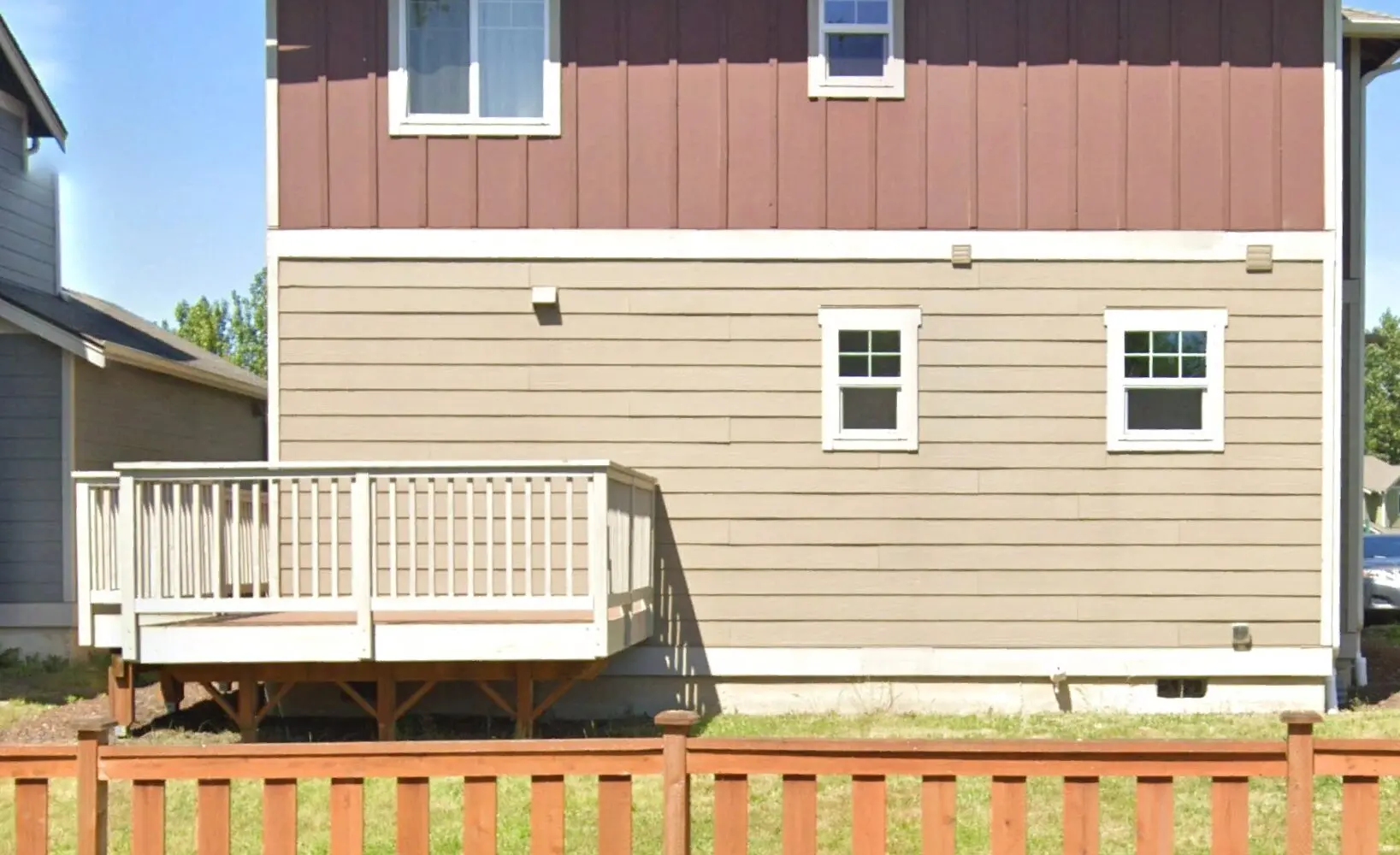
Pacific Northwest weather is often described as “mild,” but that doesn’t mean your crawl space is unaffected by outdoor temperatures.
Consider how often temperatures reach the extremes in the PNW and how that matters to your home.
Typical PNW Temperature Exposure*
| Representative Location | Approx. Days With Overnight Lows ≤35°F | Approx. Days With Highs ≥80°F |
| Portland, Oregon | ~90–110 days | ~50–60 days |
| Seattle, Washington | ~100–120 days | ~25–35 days |
| Boise, Idaho | ~150–170 days | ~90–100 days |
| Missoula, Montana | ~170–190 days | ~55–65 days |
*These are representative climate ranges by specific cities rather than statewide averages because climates can vary considerably by elevation and location within each state. The figures above are taken from The National Oceanic and Atmospheric Administration’s (NOAA) official 1991–2020 Climate Normals which are the preferred long-term benchmark for comparing local temperature patterns. Note how each city above (and surrounding state locations) shows substantial heating demand as well as meaningful summer cooling demand required to keep internal home temperature comfortable and stable.
In other words, a crawl space in the PNW can spend months exposed to cold outdoor air—and weeks or months exposed to significant summer heat.
So why do we intentionally leave large openings in the foundation walls connecting that outdoor air directly to the space underneath our homes? It no longer makes sense in today’s modern world.
Winter: Open Crawl Space Vents Can Make Your Floors Colder
Think about what happens when it is 35°F outside and the foundation vents are wide open.
Cold outdoor air enters the crawl space.
That cold air surrounds the underside of your home’s floor system.
Your heating system doesn’t get to ignore that temperature difference.
Building Science Corporation specifically notes that open crawl space vents in the wintertime make crawl spaces colder, increase heat loss from the home and contribute to uncomfortably cold floors.
Other Building Science publications routinely explain that leaky connections between crawl spaces with open vents and your interior living space can increase heating loads during winter and cooling loads during summer. This means higher heating and cooling bills. It gets expensive.
That’s an important point for homeowners: You can save money on your utility bills by closing your crawl space vents in the cold winter and the hot summer months. If you want, let your home breathe in the mild weather months of spring and fall.
Your crawl space isn’t completely isolated from the rooms above it.
Air can move through small gaps around plumbing, wiring, ductwork, floor penetrations and other openings. Crawl space industry experts typically state that about 60% of the air inside your home comes from your crawl space.
When your crawl space is extremely cold, you’re making your home fight that temperature difference.
Additionally, if your crawl space contains water pipes, HVAC ducts or other equipment, those components are also exposed to colder conditions… potentially freezing conditions. Frozen water pipes in your crawl space can be very expensive to repair. According to “Angie’s List” if a single pipe bursts or requires extensive work, the cost typically ranges from $300 to $1,500+.
Closing the vents creates a thermal buffer.
Your goal isn’t to try and heat your crawl space to living-room temperature.
You’re simply preventing unrestricted outdoor air from constantly flushing through the space beneath your home.
That can greatly help keep the interior of your home more comfortable and your floors less cold while reducing the amount of work your heating system has to do (and reducing the cost too).
Summer: Your Crawl Space Doesn’t Necessarily Need More Outdoor Air
Here’s another old assumption worth reconsidering:
“Open the vents in summer so the crawl space can dry out.”
It sounds logical.
But in much of the PNW, summer air isn’t always the dry-out solution people imagine.
Building Science Corporation notes that summertime ventilation can actually make crawl spaces more wet because the outdoor air brings humidity with it.
You don’t want warm, moisture-containing air to enter your crawl space because moisture can become a problem.
That doesn’t mean every crawl space should automatically be sealed permanently. A crawl space should be evaluated for ground moisture, drainage, vapor control, insulation, plumbing and local building requirements and treated accordingly. It makes the most sense to close your crawl space vents in the cold winter months and hot summer months and let your home breathe in the milder weather months.
So, When Should You Close Your Crawl Space Vents?
For a traditional vented crawl space, a practical PNW approach is:
Close the foundation vents before the consistently cold weather arrives.
In Oregon and western Washington, that may generally mean sometime in fall.
In Idaho and Montana, where winter temperatures can arrive earlier and stay colder longer, you may want to close them earlier.
Then keep them closed through the heating season.
During spring, when outdoor temperatures become consistently moderate, you can open them if your particular crawl-space design benefits from seasonal ventilation.
And during the hottest part of summer, closing them again can help reduce the amount of hot outdoor air entering your crawl space. You don’t want your home to sit on top of a heating pad in the hot summer… and with your vents open that is exactly what your crawl space becomes.
The exact timing should depend on your local climate and the condition and design of your crawl space.
The goal isn’t to follow a calendar. The goal is to control the environment underneath your home.
What About the Old Styrofoam Crawl Space Blocks?
This is where many homeowners have tried to solve the problem.
You’ve probably seen the inexpensive white foam blocks designed to push into foundation vents.
They are cheap.
They can work temporarily.
But there is a problem:
They are not a particularly durable long-term solution.
Styrofoam can become brittle, damaged, displaced or difficult to fit securely as the years go by. A homeowner may install them in the fall only to discover that some have fallen out, cracked or no longer seal properly. And when they blow down the street it is really irritating.
And if you’re going to the trouble of controlling the environment beneath your home, you want something designed to stay in place.
A Better Way to Control Your Foundation Vents
Vanity Vents has solved the problem.
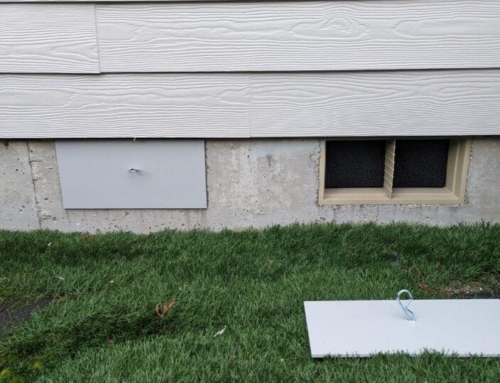
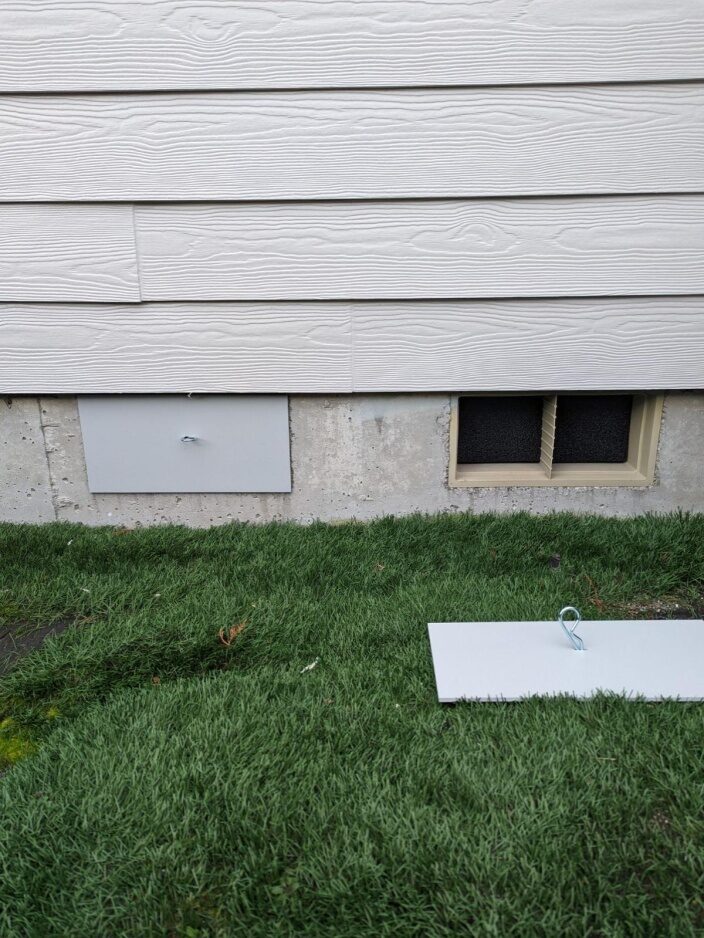
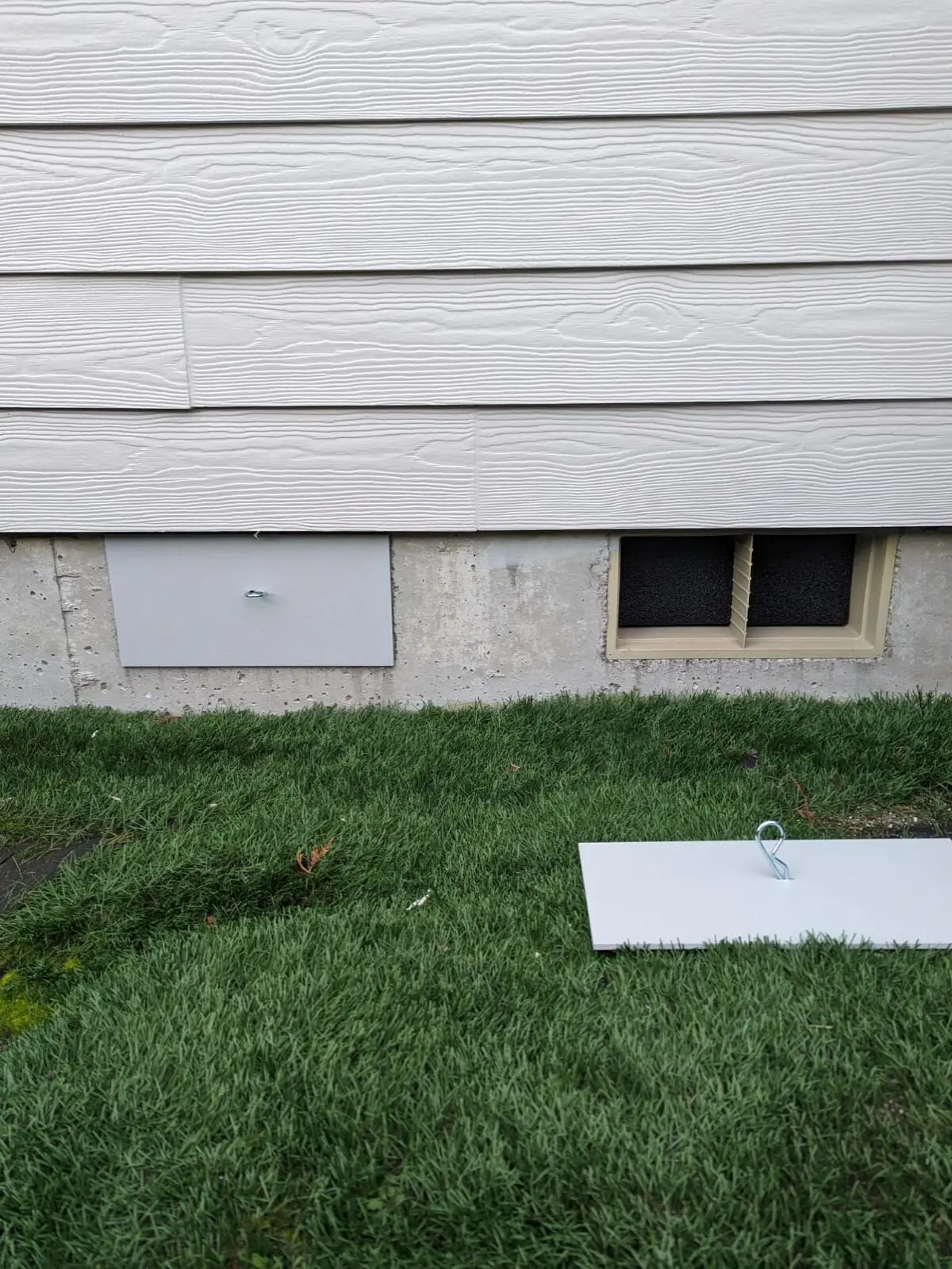
Vanity Vents are designed specifically to make closing your foundation vents easier, cleaner and more durable than relying on loose pieces of styrofoam.
Instead of wrestling with temporary blocks every year, homeowners can use a purpose-built vent-cover solution.
And because Vanity Vents also offers insulation blocks, homeowners can address both airflow and insulation around their foundation vents.
Vanity Vents built their product around a simple idea:
Your crawl space deserves better than a temporary Styrofoam fix.
Vanity Vents has earned a 100% 5-Star Google ratings from their customers, and are proud to provide a practical solution for homeowners throughout Oregon, Washington, Idaho and Montana.
Protect Your Crawl Space—and Make Your Home More Comfortable
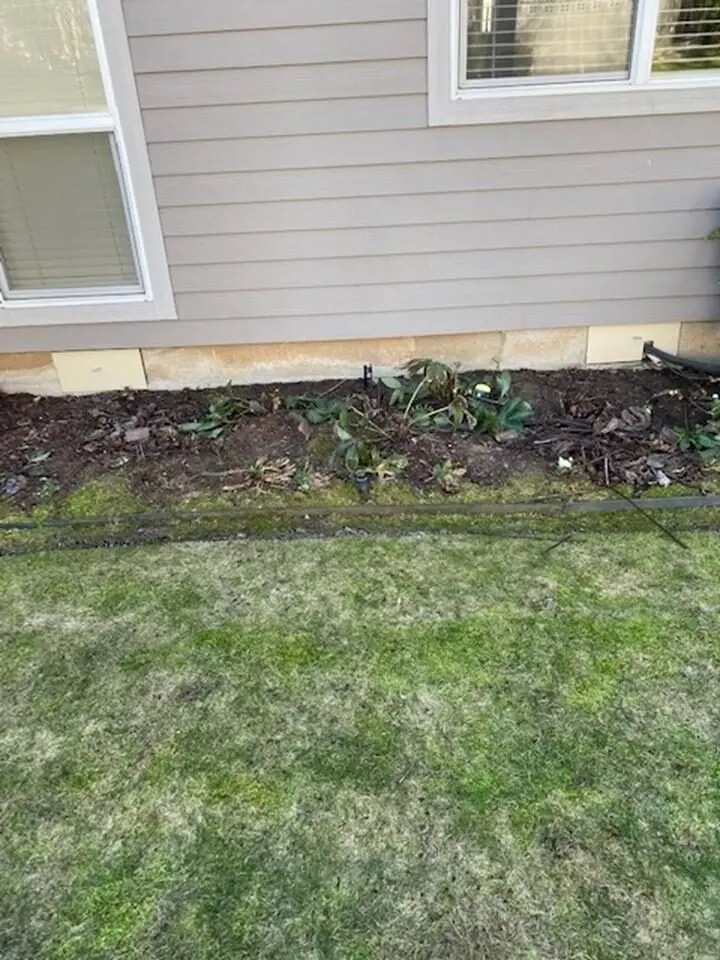
Your crawl space may be out of sight, but it isn’t out of your home’s environment.
Cold outdoor air can make the space beneath your floors colder.
Hot outdoor air can add unwanted heat during summer.
Outdoor moisture can create problems under the wrong conditions.
And your home’s heating and cooling systems have to deal with the consequences.
The old philosophy was simple:
“Crawl spaces need to breathe, so leave the vents open.”
Modern building science gives homeowners a more nuanced answer.
Control the crawl space environment. Don’t simply expose it to outdoor air 365 days a year.
For many PNW homes with traditional vented crawl spaces, that means closing the foundation vents during the coldest and hottest parts of the year and allowing appropriate ventilation during milder transitional seasons.
And when you do close those vents, use a solution designed to last.
Ready to Stop Using Old-Fashioned Styrofoam Blocks?
Visit VanityVents.com to see their crawl space vent covers and insulation blocks and find a better way to protect the space underneath your home.
Close the vents. Protect your crawl space. Improve comfort. And give your heating and cooling system a little less work to do. No tools required and they install in 3 seconds. Not to mention the instant curb appeal created by Vanity Vents.